Translating archives of thought into the vocabulary of current crises
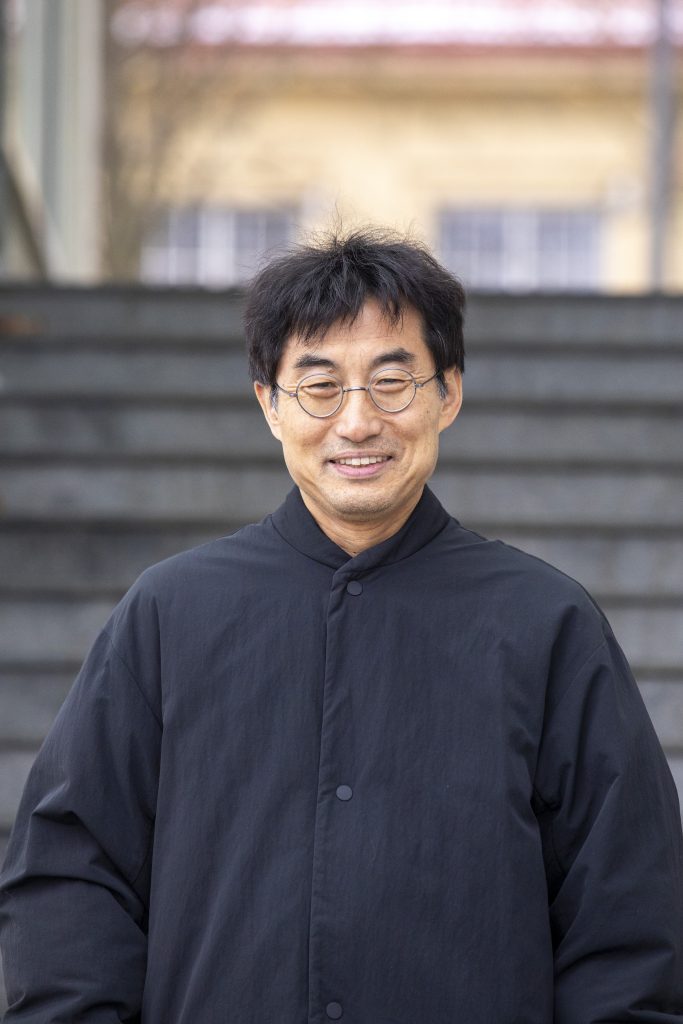
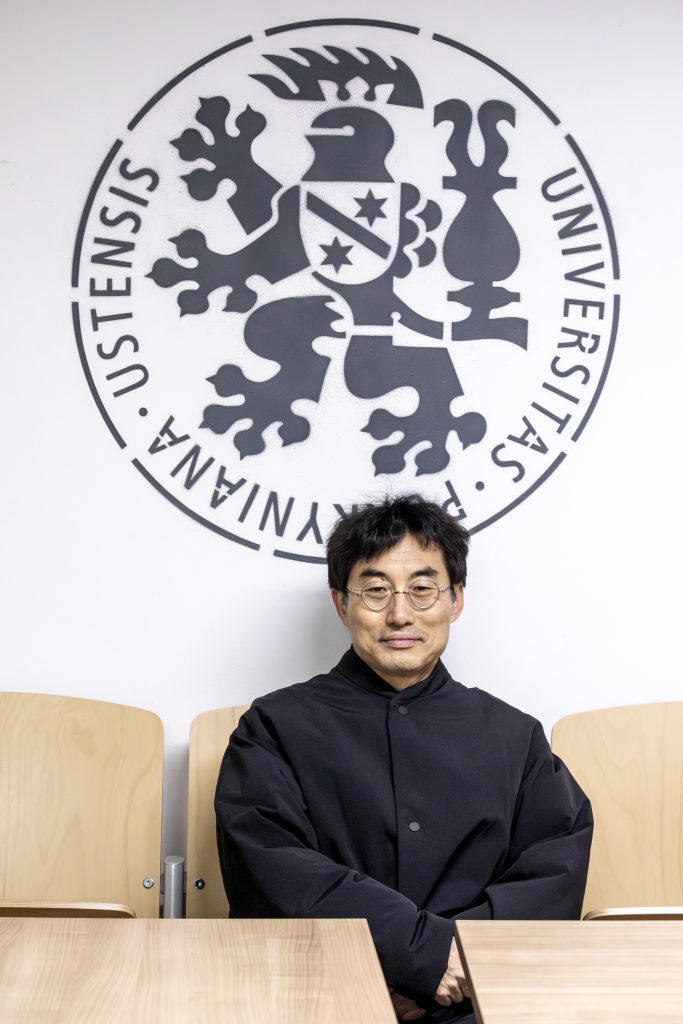
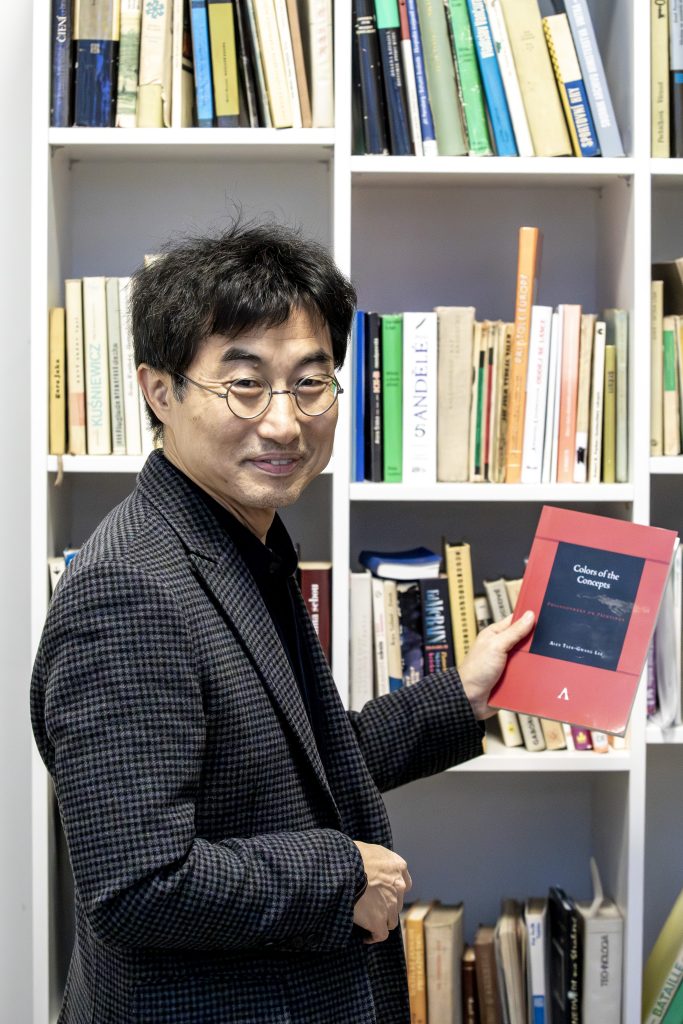
Interview with Professor Alex Taek-Gwang Lee, Global Expert at UJEP
Dear Prof. Taek-Gwang Lee, welcome to Ústí nad Labem. I am pleased you have accepted the invitation to visit our Department of Philosophy and Humanities for six months. Could you share your motivations for joining UJEP as a Global expert?
My decision to come to UJEP was motivated by two main factors. The first was a long-standing personal connection with the Czech Republic. Kyung Hee University in South Korea, where I am currently based, has long been inspired by the ideas of Václav Havel, the first President of the Czech Republic, and awarded him an honorary doctorate. I also translated Havel’s English-language speeches into Korean, which deepened my engagement with his thought and with the broader intellectual and political history of the Czech Republic.
I have therefore been keen to explore Czech culture and history more directly. My second motivation was my interest in Ústí nad Labem itself. As a post-industrial city, Ústí shares certain features with Sheffield in the UK, where I lived while completing my doctoral studies. I first visited Ústí at the invitation of Professor Fišerová for a conference on theories of perpetual peace, and I was struck by how the city’s regional conditions could serve as a compelling site for research on “weak technologies,” a concept that has become central to my current philosophical work.
These two motivations brought me to UJEP. During my six-month stay, I hope to build a foundation for collaborative, locally grounded research that can speak to broader, international questions. In particular, I would like to ensure that these research outcomes translate into tangible educational benefits for students. I will also work to establish concrete frameworks, such as student exchange programmes between Kyung Hee University and UJEP, to broaden students’ experiences and opportunities.
This is not the first time you have visited the Czech Republic. You have already begun collaborations with the Czech Academy of Sciences in Prague. You also have several professional networks across Europe. How do you see the importance of international relations in contemporary research?
I served as a visiting professor at the Czech Academy of Sciences from January to March 2025. Before that, I held research fellowships at the University of Brighton (UK), Université Paris Nanterre (France), Jamia Millia Islamia (India), National Taiwan University (Taiwan), the University of Macau and University of Santo Tomas (Philippines) with appointments ranging from three months to a full year. These experiences have convinced me that scholarship advances through networks. Research does not accumulate solely through individual effort; it grows through collective collaboration, through sustained exchanges of ideas, methods, and perspectives. We are also living through a transitional phase in global knowledge production, in which new concepts, archives, and technological conditions are reshaping the terms of inquiry at remarkable speed. To recognise and engage these shifts, international collaboration is not optional but essential Historically, scholarship has always been a history of movement. Mobility of people, texts, and techniques has repeatedly generated new forms of knowledge. The European Enlightenment, for instance, cannot be understood only through official institutions or ecclesiastical authorities; it also depended on circuits of travel, trade, and encounter that carried information across borders. Even Darwin’s voyage was not a leap into pure ignorance: by the time he set sail, reports and publications by earlier travellers had already circulated descriptions of unfamiliar flora and fauna, making the Galápagos imaginable as a site of inquiry. International networks function in this way today.
They enable researchers to introduce new questions, share emerging approaches, and create knowledge that no single context could produce alone. For this reason, students also benefit from international exchange: it allows them to test, expand, and consolidate what they learn from books through lived intellectual encounter. The aim is not to abandon local contexts, but to treat them as a springboard—using local specificity to cultivate an international perspective and sensibility capable of engaging a changing world.
You are a Professor at the School of Global Communication and a Director of the Centre for Cross-Cultural Studies at the Global Centre for Technology in Humanities at Kyung Hee University in Seoul, South Korea. What are the main research goals at the Global Centre for Technology in Humanities?
The Global Centre for Technology in Humanities is a research institute dedicated to examining technological issues from a humanities perspective. Its aim is twofold: first, to trace historically how modern technologies have been shaped by humanistic ideas, practices, and institutions; and second, to engage philosophically with contemporary technological developments, most notably the rapidly expanding field of artificial intelligence. The Centre’s purpose is not simply to compare “technology” and “the humanities,” nor to treat technology as an external object of study.
Rather, it approaches technology at a fundamental level by linking it to questions of ontology: what technologies are, how they participate in forms of life, and how they reshape relations between humans, environments, and systems of knowledge. This orientation also informs the Centre’s work on planetary thinking and care, including a research on the relationship between environment and society through technology. Drawing on anthropological and cultural-theoretical developments that emerged from the 1960s onward in North and South America, the Centre reconsiders technology under today’s dominant technoscientific paradigm and develops ethical frameworks capable of addressing technological transformation at planetary scale.
What are the priorities of education at Kyung Hee University? How do you see the possibilities for academic exchange between your university and our J. E. Purkyně University?
Kyung Hee University is one of South Korea’s leading comprehensive universities, distinguished by its long-standing commitment to humanistic values. Since 1950, it has maintained close ties with the United Nations and has sought to link education with the pursuit of global peace. Visitors to the Kyung Hee campus often encounter sculptures and memorials that give visible form to this ethos. Kyung Hee University’s interest in Václav Havel follows naturally from this educational philosophy. Institutionally, the University has consistently emphasised the integration of culture, democracy, and peace within its curriculum and public mission. During periods of authoritarian rule, such commitments carried political risk; since Korea’s democratisation, however, Kyung Hee’s efforts have been widely recognised and respected.
You specialise in political philosophy and critical theory of technologies. You have published numerous theoretical works in this field. Could you explain the aims of your professional interest? What problems of the contemporary world do you find important to address?
Today, our societies face immense challenges. Politically, populism and authoritarianism are reshaping democratic life; socially and economically, artificial intelligence and robotics are rapidly transforming industrial structures and everyday forms of work. These developments did not arrive overnight. They have unfolded over decades, and many of their trajectories were already taking shape in the aftermath of the 1960s, prompting sustained philosophical reflection on automation, mass media, technocracy, governance, and the limits of liberal democracy. In other words, much of what we are living through was anticipated. It was analysed in advance, and counter-proposals were formulated, often with striking clarity.
Yet many of these discussions now sit neglected, gathering dust on library shelves, treated as historical curiosities rather than resources for orientation. If we are to confront the present with anything more than reactive commentary or technical “solutions,” we need to reactivate this archive of thought and translate it into the vocabulary of current crises. This, I believe, is one of the central tasks of the humanities today: not to provide consolation, but to recover and renew the conceptual tools that help us diagnose our conditions, resist their inevitability, and imagine alternative futures. My field of specialisation is European political philosophy, and from that theoretical standpoint I am interested in developing alternative frameworks capable of orienting us towards a better future.
My sustained engagement with French philosophy of the 1960s follows from this concern. I believe many of the values, tensions, and institutional imaginaries that shape our present were forged in that period; to understand the world we inhabit today, we therefore need to understand the 1960s. For this reason, I do not treat 1960s European political philosophy as a closed historical object. Rather, I see it as a set of theoretical inventions whose extensions, often indirect and uneven, continue to structure contemporary political life. The point is not to preserve the period, but to grasp how its conceptual transformations still operate in the present. From this perspective, seemingly disparate historical experiences can be read as connected without being reduced to sameness.
South Korea’s democratisation, for example, is not identical to the Czech experience, and the trajectories were clearly different. Yet there is a comparable intensity in what is at stake: struggles over civil society, sovereignty, rights, and the meaning of democracy itself. The connection here is not identity but resonance, the commonality of distinct singularities. This pattern of asymmetrical relations, shared stakes across different histories, permeates the contemporary world. It was, in important ways, the political and intellectual spirit of the 1960s that helped to articulate this configuration. We cannot simply reproduce that moment. My aim, rather, is to theorise it carefully so that, by understanding the present through its concepts and tensions, we may also expand the horizon of what a better future could be.
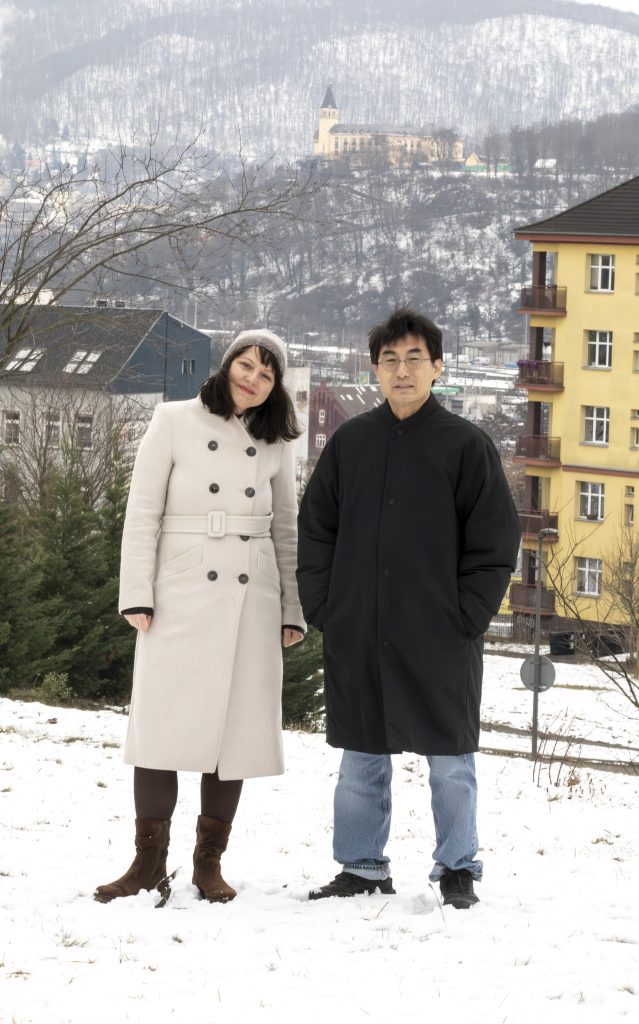
Interview was conducted by Michaela Fišerová from the Department of Philosophy, Faculty of Arts UJEP